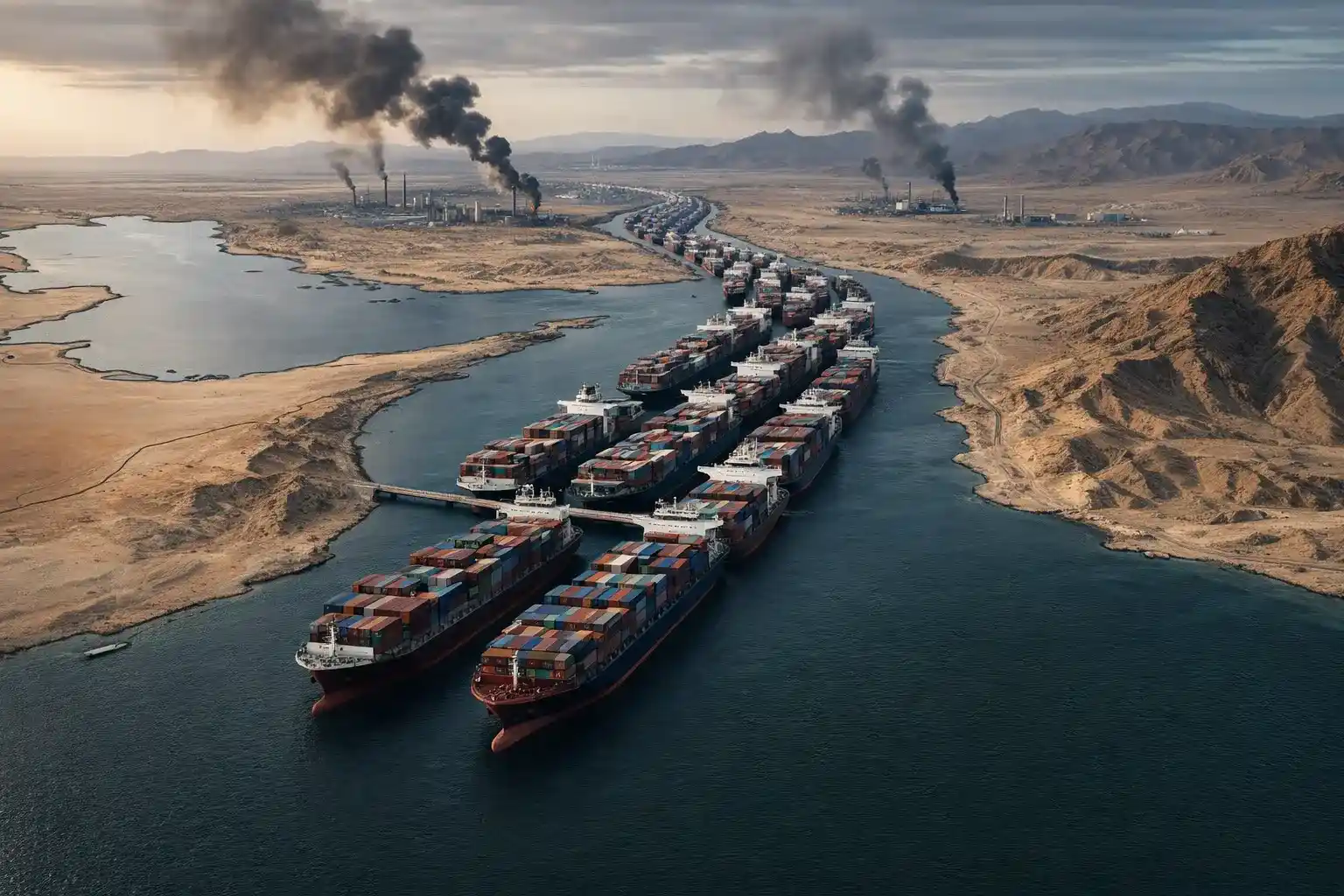
By the first week of March, just days after the February 28 strikes in West Asia, the ripple effects had already travelled to India.
In Bhadohi, Uttar Pradesh, a carpet exporter tracking shipments to the Gulf saw timelines begin to slip almost immediately. Containers were delayed or rerouted, and incoming raw materials slowed. Within weeks, payment cycles that typically closed in 30 to 40 days were stretching beyond 90.
Similar signals emerged across clusters. In Agra, Uttar Pradesh, manufacturers reported a sharp rise in petrochemical-linked inputs. In Ludhiana, Punjab, factories adjusted operations as industrial gas shortages pushed them toward costlier fuels. At ports such as Mundra, Gujarat, cargo movement slowed as freight routes became more uncertain.
These developments point to a broader shift. What appears as a logistical disruption is, in practice, a multi-layered stress event across the global supply chain, where movement of goods, cost structures, and payment cycles are all being affected at once.
Logistics Delays are Now Working Capital Challenges
Freight and transit disruptions have been among the earliest visible impacts. Shipping costs on affected routes have risen sharply, in some cases increasing several-fold, while lead times have extended by 10 to 20 days.
When shipments are delayed, invoicing is delayed. In several export-oriented sectors, payment cycles have lengthened from 30 to 40 days to as much as 90 to 120 days, with a significant portion of transactions being affected.
For businesses operating on tight margins, this change throws the rhythm of operations into disarray. Working capital is already tied up in goods sitting in transit or awaiting clearance. What makes this harder is that raw materials, disrupted by supply shortages, have become both more expensive and unpredictable, pushing many businesses to slow down or halt procurement and production altogether. Yet fixed obligations don’t pause. Wages go out, utility bills arrive, and the cost of maintaining operations climb, even as the inputs needed to run them become harder to secure.
This mismatch between inflows and outflows is where supply chain disruption becomes a financial constraint rather than just an operational inconvenience.
Input Cost Pressures are Compounding Risk
Alongside logistics challenges, rising input costs are adding another layer of strain. Petroleum-derived materials, packaging inputs, and industrial fuels have seen price increases ranging from 20% to 30% across sectors. India’s dependence on imported energy has amplified this effect. Oil price increases and gas supply disruptions have already begun to affect manufacturing output and sentiment.
For exporters, this creates a difficult position, as production costs are rising, but pricing flexibility is limited due to global competition and pre-agreed contracts. As a result, margins are being compressed at the same time that payments are being delayed. This dual pressure is central to current trade risk management challenges, where both cost volatility and payment uncertainty must be managed simultaneously.
Vendor Networks are Under Strain
When exporters receive payments later than expected, their ability to pay suppliers is affected. Smaller vendors, particularly MSMEs, are often the most exposed. They face higher input costs, longer receivable cycles, and limited access to affordable credit. In clusters such as textiles, handicrafts, and light manufacturing, vendors are increasingly absorbing cost increases while waiting longer for payments. This can slow production or reduce output, even when demand remains intact.
Vendor financing mechanisms are designed to address these gaps, but their effectiveness depends on timely access and integration with buyer payment cycles. In periods of disruption, these systems become more critical.
Revisiting Working Capital Strategies Through Finance
Previous periods of disruption have shown that firms with stronger financial visibility and access to liquidity are better positioned to navigate uncertainty.
- One approach is to strengthen the use of receivable financing. By enabling early payment against confirmed invoices, these solutions allow businesses to convert receivables into immediate liquidity without increasing traditional debt burdens.
- Another lever is structured vendor financing, which ensures that suppliers receive timely payments even when buyer payment cycles are extended. This helps maintain production continuity and reduces the risk of supply chain fragmentation.
- In addition, closer monitoring of receivables and tighter alignment between procurement, logistics, and finance functions can improve forecasting and decision-making.
Collectively, these approaches represent a shift from reactive funding to more proactive supply chain risk management, where liquidity planning is integrated with operational realities.
A More Connected View of Disruption
The current situation highlights how closely linked operational and financial flows are within the global supply chain. Delays at ports are influencing receivables. Energy price movements are affecting supplier stability. Logistics uncertainty is shaping credit requirements. Each of these factors reinforces the others.For Indian businesses, the response requires more than adjusting shipping routes or renegotiating contracts. It calls for a more integrated approach that combines supply chain finance solutions, cash flow management, and trade risk management. The experiences emerging from industrial clusters suggest that resilience will depend on the ability to manage liquidity across extended cycles while supporting vendor ecosystems. Given that we are in an environment where disruptions can escalate quickly, maintaining the flow of payments is becoming as important as maintaining the flow of goods.